
BLOG
2026/07/30Clicks:284
Artificial intelligence is reshaping the design of modern data centers.
A few years ago, most server racks could be cooled effectively with airflow management and conventional air-conditioning systems. Today, the situation is different. AI training clusters, high-performance computing (HPC) systems, and next-generation GPU platforms are generating heat loads that traditional air cooling struggles to manage efficiently.
As rack power densities continue to rise, liquid cooling is rapidly moving from an optional technology to a core infrastructure requirement. Industry analysts estimate the global data center liquid cooling market could reach nearly USD 30 billion by 2033, driven largely by AI workloads and high-density computing environments.
At the center of every liquid cooling system is a component that often receives less attention than cold plates or CDUs but is equally important: the liquid cooling hose.
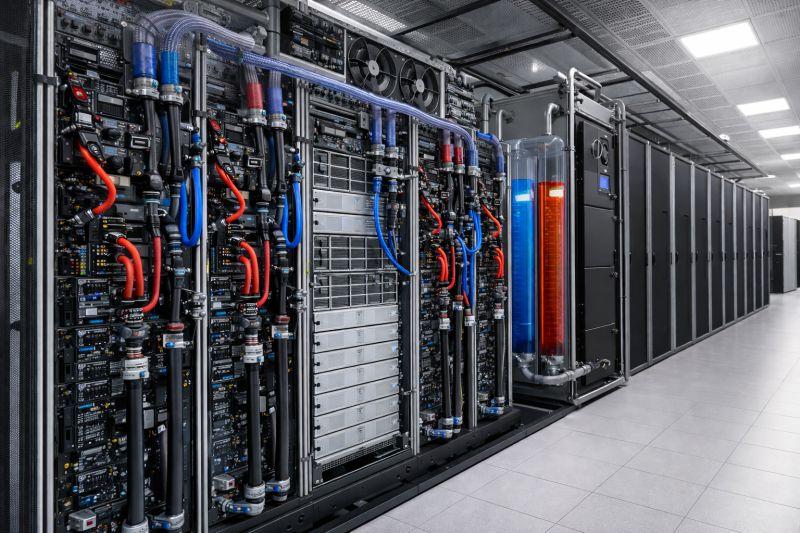
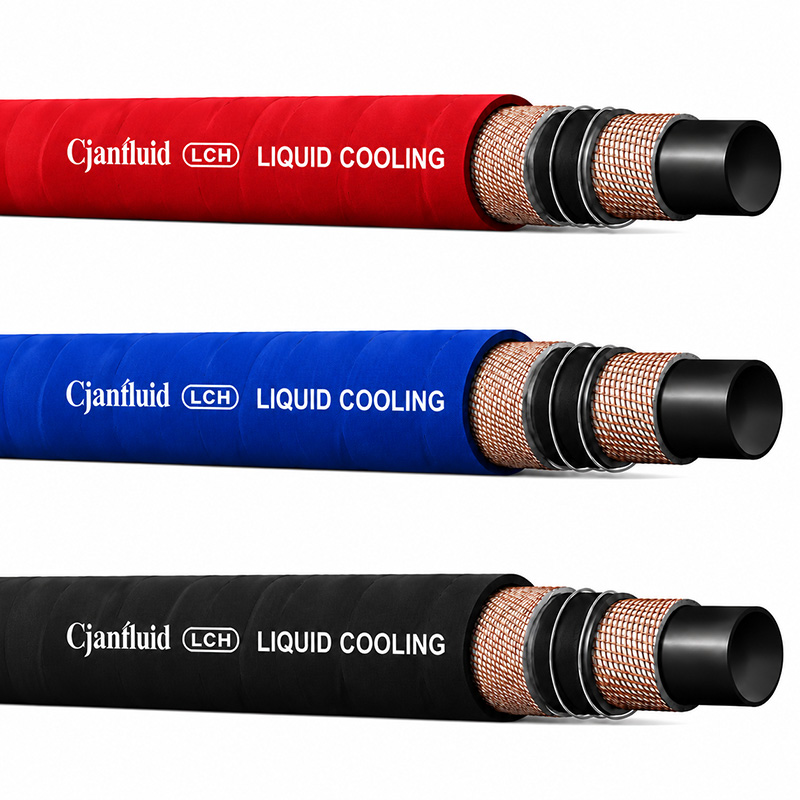
A liquid cooling hose is a flexible conduit designed to transport coolant between different parts of a cooling loop.
In a typical AI data center, the cooling path may include:
CDU (Coolant Distribution Unit)
↓
Manifold
↓
Flexible Cooling Hose
↓
Cold Plate
↓
GPU / CPU
↓
Return Line
The hose acts as the circulatory system of the liquid cooling infrastructure, continuously carrying coolant to absorb heat from processors and transfer it back to the cooling system.
Unlike ordinary industrial hoses, liquid cooling hoses must operate reliably under continuous flow conditions while maintaining:
The answer is simple: heat.
Modern AI accelerators consume significantly more power than previous generations of processors. As computing density increases, the amount of heat generated inside a rack can exceed what traditional airflow systems can efficiently remove.
Many new AI facilities are now designed around cold plate liquid cooling because it provides better thermal efficiency and supports higher rack densities than air cooling alone. Cold plate systems are currently the dominant liquid cooling architecture due to their compatibility with existing server designs and relatively straightforward deployment.
In practical terms, liquid cooling allows operators to:
When engineers evaluate liquid cooling systems, attention is often focused on:
However, field experience shows that many cooling loop failures originate from connection points, fittings, and hose assemblies rather than from major cooling equipment.
A cooling hose must withstand continuous circulation over thousands of operating hours.
If the hose material is incompatible with the coolant, or if flexibility is insufficient for rack routing, problems may develop over time, including:
In a large AI cluster, even a minor coolant leak can lead to costly downtime and maintenance activities.
Modern GPU racks are densely packed.
Cooling hoses often need to navigate narrow spaces and complex routing paths.
A hose with poor flexibility may create installation challenges or place unnecessary stress on fittings and manifolds.
Many liquid cooling systems use:
The hose material must remain stable during long-term exposure to these fluids.
AI infrastructure typically operates around the clock.
Unlike intermittent industrial applications, data center cooling systems may run continuously for years.
Reliability therefore becomes a critical design consideration.
As rack power increases, fire safety requirements receive greater attention.
Flame-retardant cooling hoses can help reduce risk and improve overall system resilience, particularly in high-density facilities.
Among available materials, EPDM rubber has become a popular choice for many liquid cooling systems.
Advantages include:
For these reasons, EPDM-based cooling hoses are frequently found in:
As AI computing continues to push thermal limits, liquid cooling is becoming a foundational technology rather than a niche solution.
While components such as cold plates and CDUs often receive the most attention, the performance of the entire cooling loop ultimately depends on the reliability of every connection point. Liquid cooling hoses play a critical role in maintaining coolant flow, protecting system uptime, and supporting long-term operational stability.
For operators designing next-generation AI infrastructure, selecting a hose specifically engineered for liquid cooling applications is no longer a minor detail—it is an important part of overall system reliability.
 Mobile


 GLOBAL


