GLOBAL
Liquid Cooling Hose Case Study: Improving Cooling Reliability for Semiconductor Equipment
How CJAN LCH Hose Addresses Pressure, Temperature and Coolant Requirements
Cooling systems used in semiconductor manufacturing equipment often operate under demanding conditions. Continuous circulation, temperature fluctuations and changing pressure loads place requirements on every component in the coolant circuit.
The hose may appear to be a relatively small part of the system, but its material, pressure capability and installation characteristics can affect the reliability of the entire cooling arrangement.
This case study examines a semiconductor equipment cooling application in which the customer was looking for an alternative to general-purpose industrial flexible hoses. CJan Fluid Technology recommended its LCH Fire Resistant Liquid Cooling Hose after reviewing the application's operating requirements.
The focus was not simply on replacing one hose with another. The important task was to identify a hose solution suited to the actual coolant, pressure and temperature conditions.
1. Customer Application Background
The customer operates in the semiconductor industry and required a flexible hose solution for an equipment cooling circulation system.
The existing installation used industrial flexible hoses to transfer coolant. As the equipment's operating requirements became more demanding, the customer placed greater emphasis on:
- Long-term operating reliability
- Temperature resistance
- Pressure stability
- Coolant compatibility
- Reducing the risk of leakage
- Maintaining flexibility for equipment installation
These requirements made it necessary to review whether a hose developed specifically for liquid cooling applications would be more appropriate than a general-purpose industrial hose.
The application was therefore evaluated from the perspective of the complete operating environment rather than hose dimensions alone.
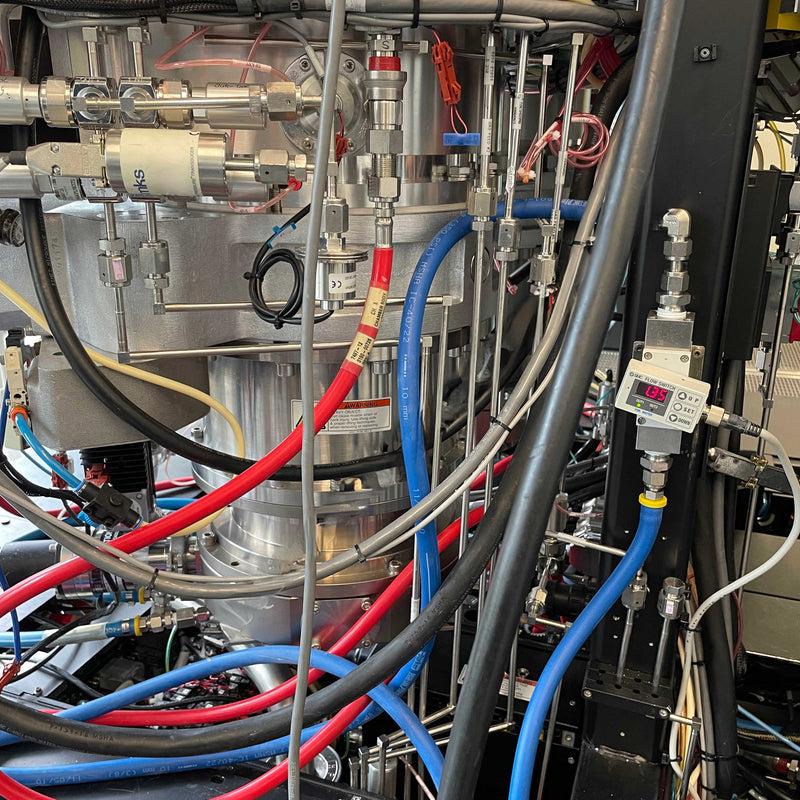
2. Application Conditions and Technical Requirements
The application information provided for the hose evaluation included the following operating conditions.
| Parameter | Application Requirement |
|---|---|
| Industry | Semiconductor equipment |
| Application | Equipment cooling circulation |
| Medium | Cooling coolant |
| Coolant types identified | Ethylene glycol-based coolant and fluorinated fluid |
| Working pressure | Up to 1.6 MPa (16 bar) |
| Operating temperature | Up to 120°C |
| Main requirement | Reliable coolant transfer |
| Other considerations | Pressure resistance, temperature stability, chemical compatibility and leakage risk |
3. Engineering Challenges
Several factors needed to be considered before recommending a replacement hose.
3.1 Pressure Stability During Continuous Operation
A cooling circulation system operates over extended periods. The hose must therefore be suitable for the system's working pressure and any relevant pressure variations.
For this application, the stated working pressure requirement was up to 16 bar.
The evaluation needed to consider the hose's pressure capability under the intended operating conditions, rather than relying on burst pressure as an indication of normal working performance.
The complete connection arrangement also matters. Hose ends, fittings and assembly methods should be considered together when assessing pressure integrity.
3.2 Temperature Resistance
Semiconductor equipment can generate substantial heat during operation. The cooling circuit must transfer heat away while maintaining stable fluid circulation.
The application specified an operating temperature of up to 120°C.
At this temperature level, the hose material and construction need to be evaluated for their suitability under the actual operating conditions. Temperature capability should not be considered separately from pressure, coolant compatibility and mechanical requirements.
3.3 Coolant Compatibility
The application identified ethylene glycol-based coolant and fluorinated fluid as relevant cooling media.
These fluids should not automatically be treated as interchangeable. Their chemical composition and operating conditions need to be considered when evaluating hose materials.
Compatibility should cover the wetted components of the fluid path, not just the hose's outer construction.
For this reason, coolant identification was an important part of the product evaluation.
3.4 Leakage Risk and Long-Term Reliability
Coolant leakage can create maintenance work and potentially interrupt equipment operation.
In semiconductor manufacturing environments, maintaining stable equipment operation is particularly important.
The hose therefore needed to be considered as part of a complete fluid connection system. Material suitability, pressure performance, installation routing and connection integrity all contribute to the overall assessment.
4. CJAN's Recommended Solution: LCH Fire Resistant Liquid Cooling Hose
After reviewing the application requirements, CJan Fluid Technology recommended its LCH Fire Resistant Liquid Cooling Hose.
LCH is positioned for liquid cooling applications involving semiconductor equipment, data centers and other thermal management systems.
For this case, the product recommendation was based on the need to address several requirements together:
- Pressure capability for the stated operating conditions
- Temperature suitability
- Compatibility with the selected cooling medium
- Flexible installation
- Safety-oriented hose construction
Rather than treating the hose as a general-purpose fluid transfer component, the selection focused on its role in a dedicated cooling circulation system.
The final configuration should always be checked against the latest LCH product documentation and the customer's actual coolant formulation.
5. Why Hose Selection Matters in Semiconductor Cooling
A liquid cooling system is made up of multiple components working together. The hose connects equipment interfaces and allows coolant to circulate between different parts of the system.
An unsuitable hose can introduce problems even when the cooling equipment itself is correctly selected.
For semiconductor equipment cooling, engineers should pay particular attention to the following points.
Coolant and Material Compatibility
The actual coolant formulation should be identified before selecting the hose. The evaluation should include the relevant fluid composition, operating temperature and exposure conditions.
Working Pressure
The specified working pressure must be within the applicable operating limits of the hose assembly. Pressure ratings should be checked at the intended temperature.
Installation Flexibility
The hose needs to fit the equipment layout without excessive bending, twisting or mechanical stress at the connections.
Connection Integrity
Fittings, sealing components and hose assembly methods should be evaluated together. A suitable hose cannot compensate for an incompatible or incorrectly assembled connection.
Inspection and Maintenance
The installation should allow appropriate inspection and replacement access. Testing and acceptance requirements should be agreed before the hose assembly enters service.
6. Application Scope Beyond Semiconductor Equipment
Although this case focuses on semiconductor equipment cooling, the same engineering considerations are relevant to other liquid cooling applications.
CJAN's liquid cooling hose portfolio is also positioned for:
- Data center liquid cooling systems
- AI server thermal management
- High-performance computing (HPC)
- Electronic equipment cooling
- Battery thermal management
- Industrial cooling loops
- Precision equipment temperature control
The specific hose model should be selected according to the actual application requirements. A hose suitable for one cooling circuit should not automatically be assumed suitable for every other system.
7. CJAN's Liquid Cooling Hose Portfolio
CJAN offers several hose options for liquid cooling applications, including LCH, LCH-SD and LCH-SDS.
Each product should be evaluated according to its published construction and technical specifications.
LCH – Fire Resistant Liquid Cooling Hose
LCH is the hose recommended in this semiconductor equipment application. It is positioned for liquid cooling systems where pressure, temperature and coolant requirements need to be considered together.
View LCH ProductLCH-SD – Fire Resistant Liquid Cooling Hose
LCH-SD is another option in CJAN's data center liquid cooling portfolio. Its suitability should be reviewed against the project's required dimensions, pressure, temperature and installation conditions.
View LCH-SD ProductLCH-SDS – Ultra-Flexible Fire Resistant EPDM Hose
LCH-SDS is positioned for applications where flexible routing is an important consideration. Its suitability depends on the actual operating conditions and the space available for installation.
View LCH-SDS ProductFor more information, visit the CJAN Liquid Cooling Solutions page.
8. What Engineers Should Provide When Selecting a Cooling Hose
For similar semiconductor equipment projects, a useful technical inquiry should include:
- Cooling medium and exact coolant formulation
- Normal and maximum working pressure
- Minimum, normal and maximum operating temperature
- Required flow rate
- Required hose internal diameter
- Hose length and installation routing
- Minimum bend radius
- Fitting and connection configuration
- Required testing and inspection
- Expected operating conditions and maintenance requirements
Providing this information allows the hose supplier to evaluate the application more accurately and identify any requirements that still need confirmation.
Conclusion
This semiconductor equipment cooling application demonstrates why hose selection should be based on actual operating conditions rather than general product descriptions.
The customer needed a flexible cooling hose solution for an application involving ethylene glycol-based coolant, fluorinated fluid, working pressure up to 16 bar and operating temperatures up to 120°C.
After reviewing these requirements, CJan Fluid Technology recommended its LCH Fire Resistant Liquid Cooling Hose for the application.
For semiconductor equipment manufacturers and cooling system integrators, the key lesson is straightforward: coolant compatibility, pressure, temperature, installation and connection integrity should be evaluated together.
CJAN continues to provide liquid cooling hose options for semiconductor equipment, data centers and other thermal management applications. The engineering team can review project requirements and help identify a suitable hose configuration based on the actual operating conditions.